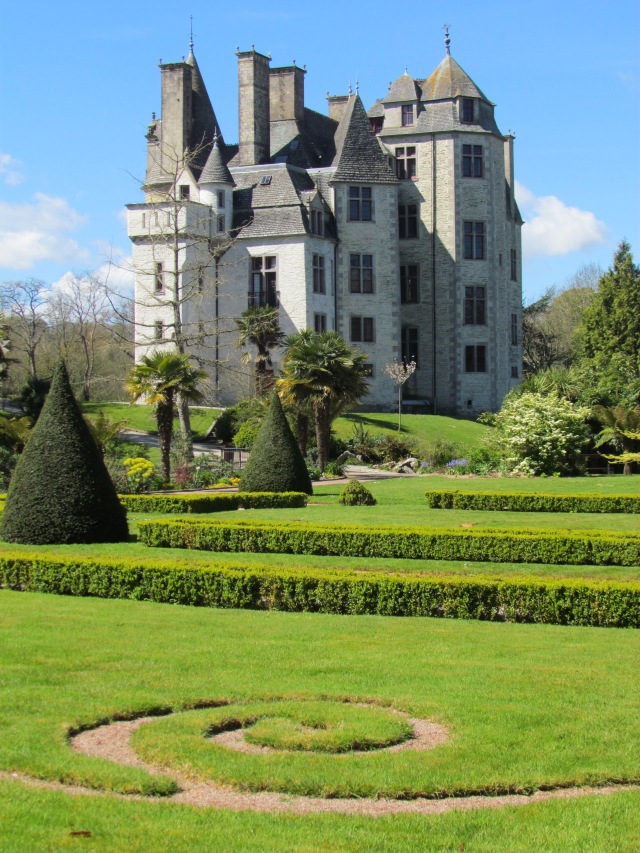
We spent most of the day in the park in the village of Tourlaville where the Chateau de Ravalet is located. I think this is the most photogenic place we’ve visited yet. The grounds are immaculate and well-attended and the chateau looks fabulous from any angle. Unfortunately, the chateau itself is in disrepair and not open to the public. The owner of the little café on the chateau grounds said that it will take 5 million Euros to renovate and its owner, the City of Cherbourg where Tourlaville is located, doesn’t have the money.
Here’s a little background on the chateau:
The Chateau de Ravalet castle was built in the Renaissance style between 1562 and 1575. Originally a medieval manor house belonging to the royal domain, it was sold to John II de Ravalet, Lord of Tourlaville, one of Chuck’s direct ancestors, who built the chateau on the property. John II gave it to his nephew, John III, whose children, Julien and Marguerite, had an scandalous, incestuous love affair which resulted in their beheading in Paris in 1603, after a denial of clemency by the king.
Following severe financial problems, Ravalet sold the estate and it subsequently changed hands several times over the years. The chateau was used as a hospital during the First World Warand the castle was listed as a historic monument in 1930. It was occupied by the German army during the Second World War and U.S. troops in the Liberation.
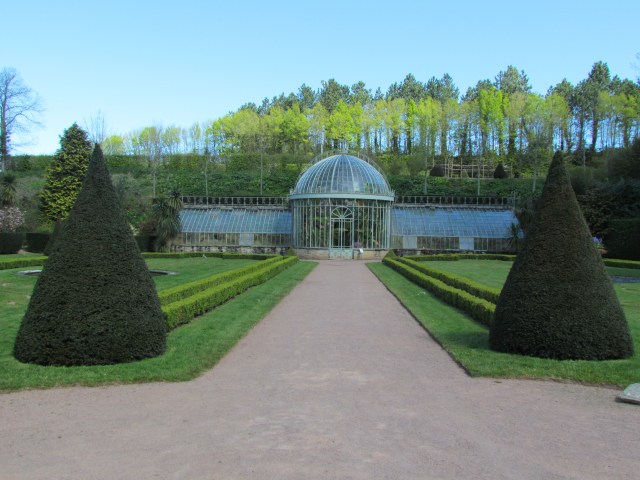
The Chateau site includes a Renaissance park with a moat. The park was redesigned in 1870 with two ponds and a cave. A greenhouse was built between 1872 and 1875 and contains many exotic plants. The park was acquired by the City of Cherbourg in 1935 and became a public garden. The park was listed as a historic site in 1996.
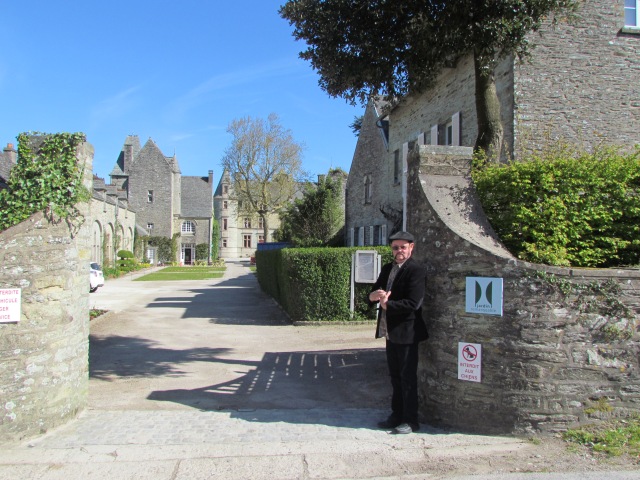
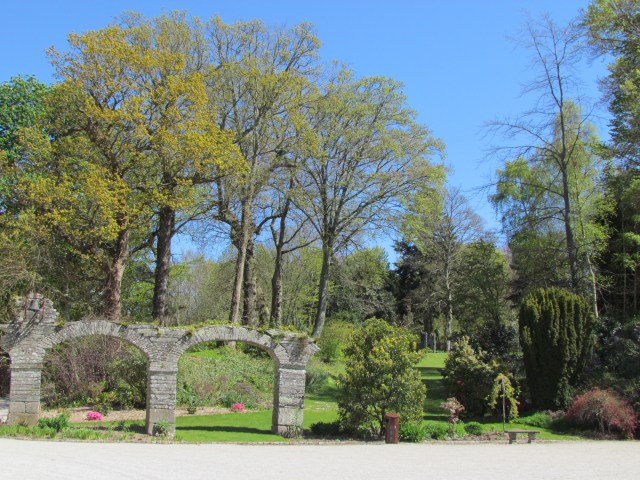
The modest entrance to the city park where the Chateau de Ravalet is located.
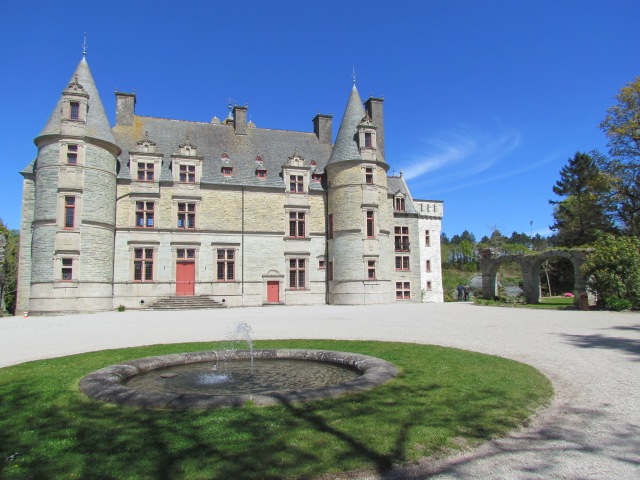
Here’s our first look at the front of the chateau. There’s a small fountain in the middle of the circular driveway.
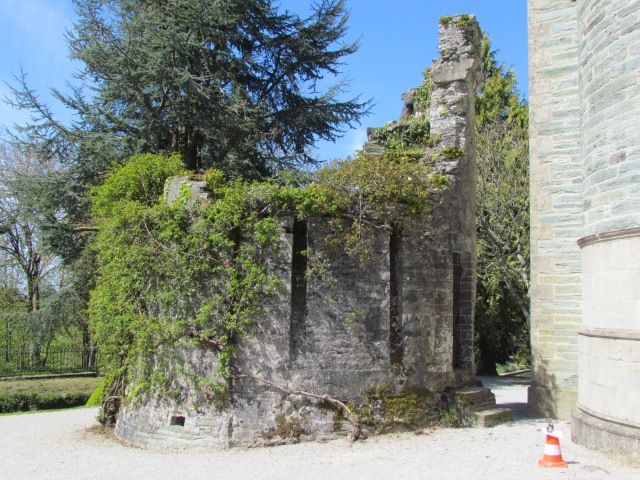
To the left of the chateau are the ruins of a medieval guard tower.
And to the right are seen the ruins of a medieval wall.
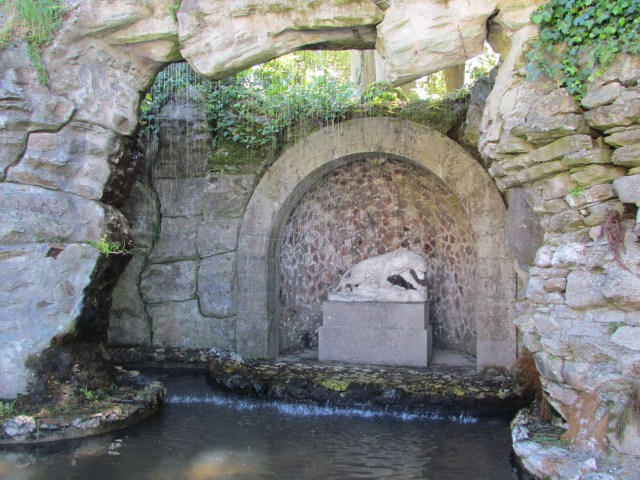
Also to the right is this unusual fountain. There’s a ledge across the top of the arch and water is dripping down all of the way across the ledge. Sitting behind the dripping ledge was a tiger.
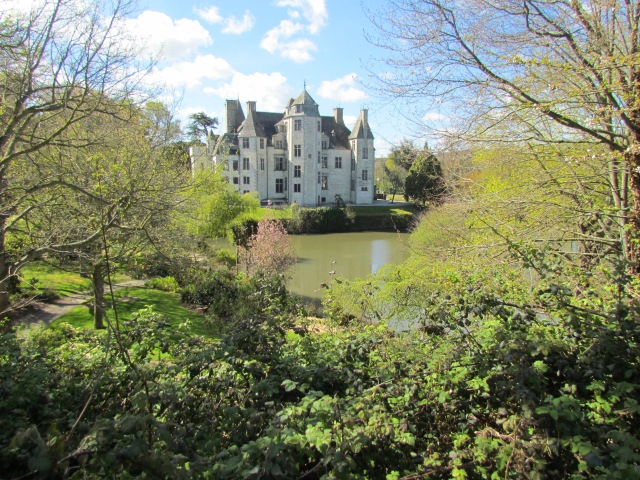
Here’s the other side of the chateau as seen from across the lake. There are points all around the park which were clearly planned to be points from which to easily get good photos.
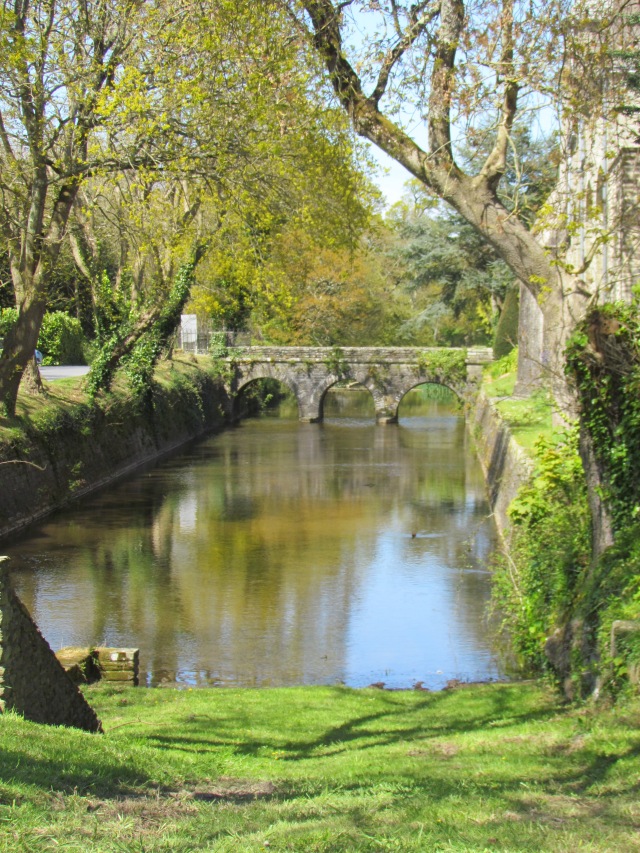
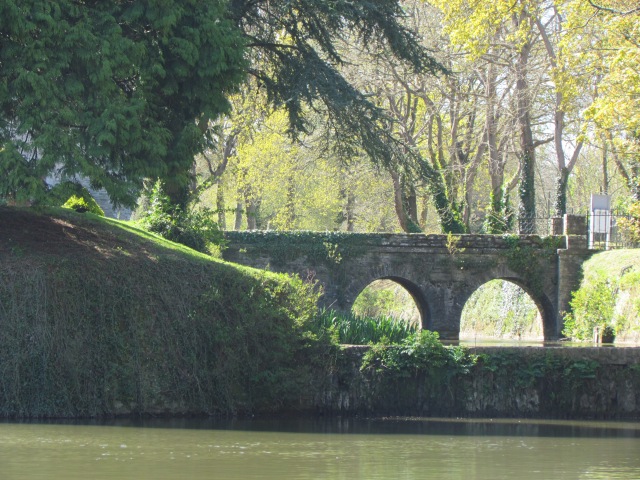
There’s a moat along one side of the chateau and periodically there are bridges that cross over the moat.
Even the bridges across the moat were photogenic.
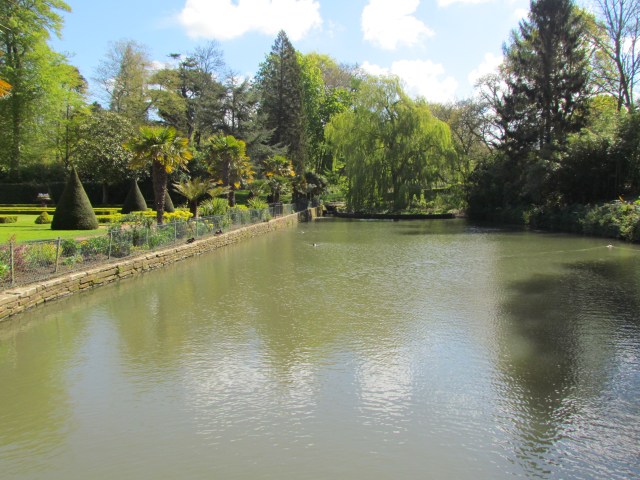
There are 2 lakes on the park grounds. There’s a freeform natural looking lake directly in front of the chateau and then this rectangular one is next to the formal gardens.
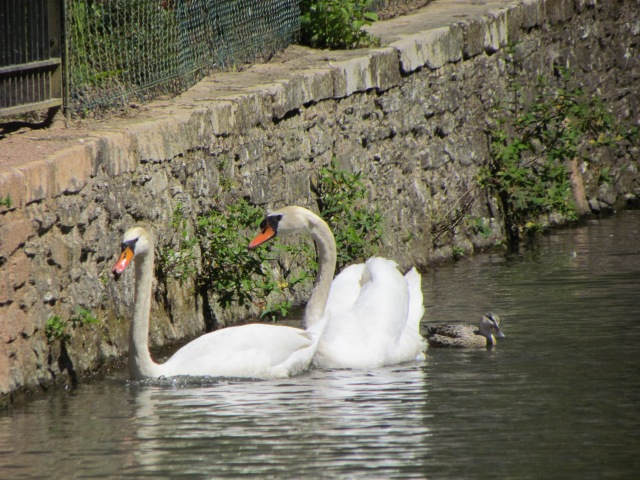
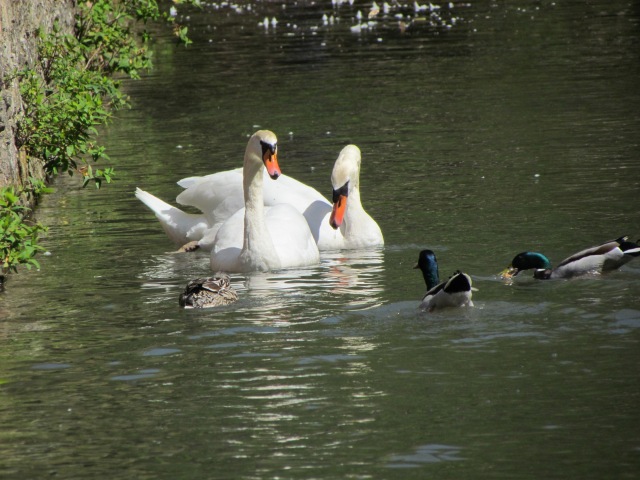
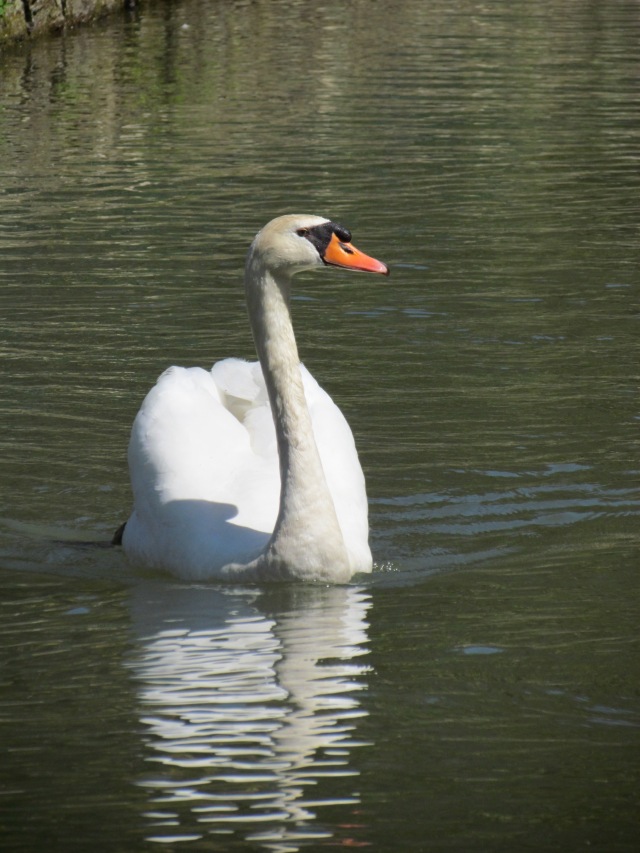
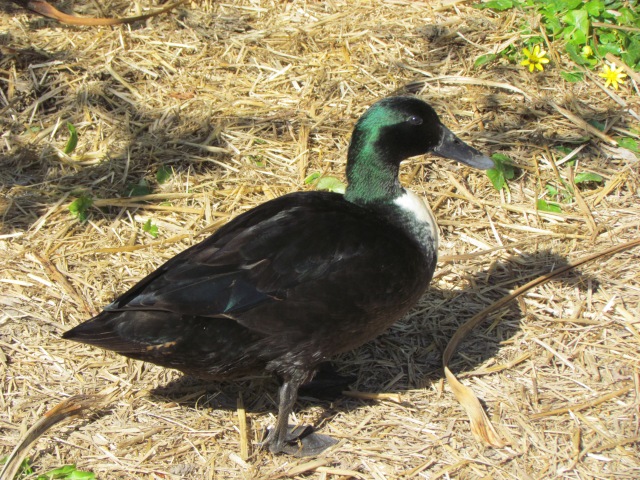
The rectangular pool is where most of the waterfowl are located. The birds are very tame because people take pleasure in feeding them. A lot.
Swans and friends.
Swans are so elegant and graceful. And sometimes mean!
We named her Marie. She’s a little different from the others, very vocal. And she followed us around everywhere.
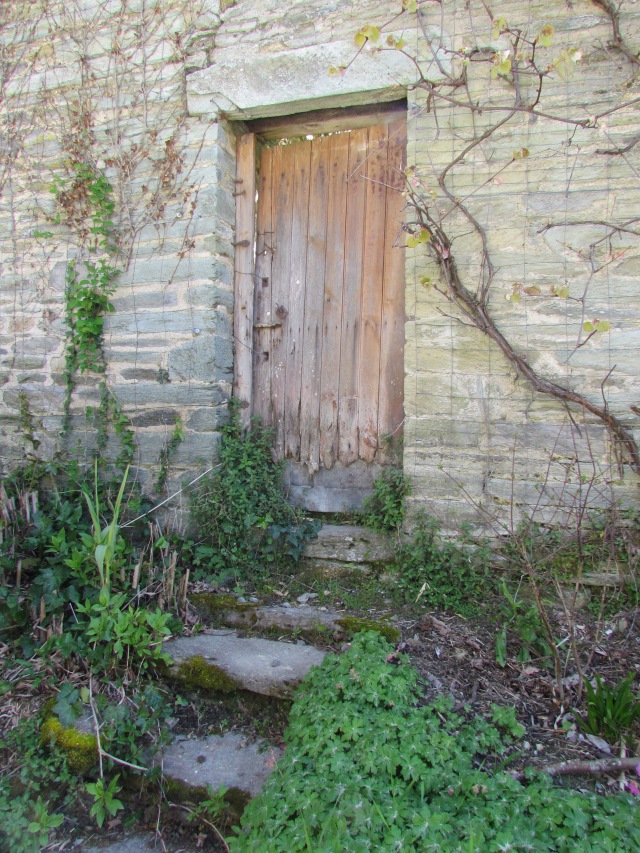
We really liked this little door and the tiny steps up to it.
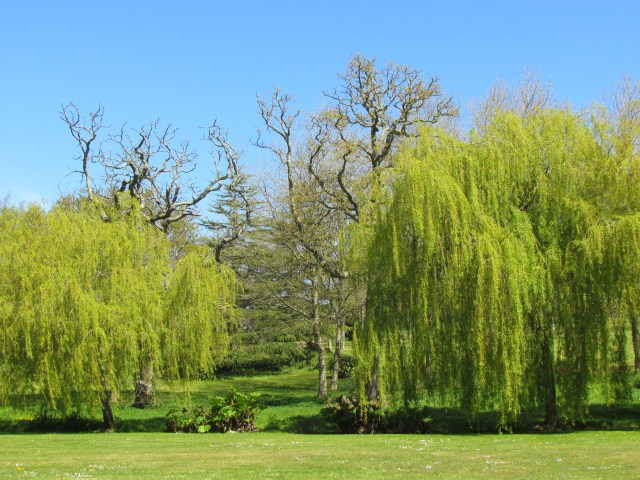
The park is 35 acres with long trails through it. There were small groves of different kinds of trees. These weeping willows were so graceful.
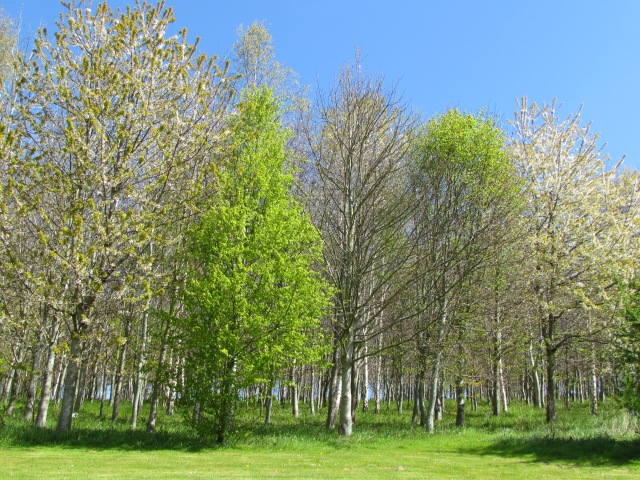
This was another small grove of trees that was so green and pretty. These trees, as well as others, had large areas of daffodils under them – unfortunately they were already finished blooming.
This small greenhouse was built in 1873. We couldn’t get inside but it was interesting to look in the windows.
 Springtime in France